by slingshotpower_40wdzw
Share
by slingshotpower_40wdzw
Share
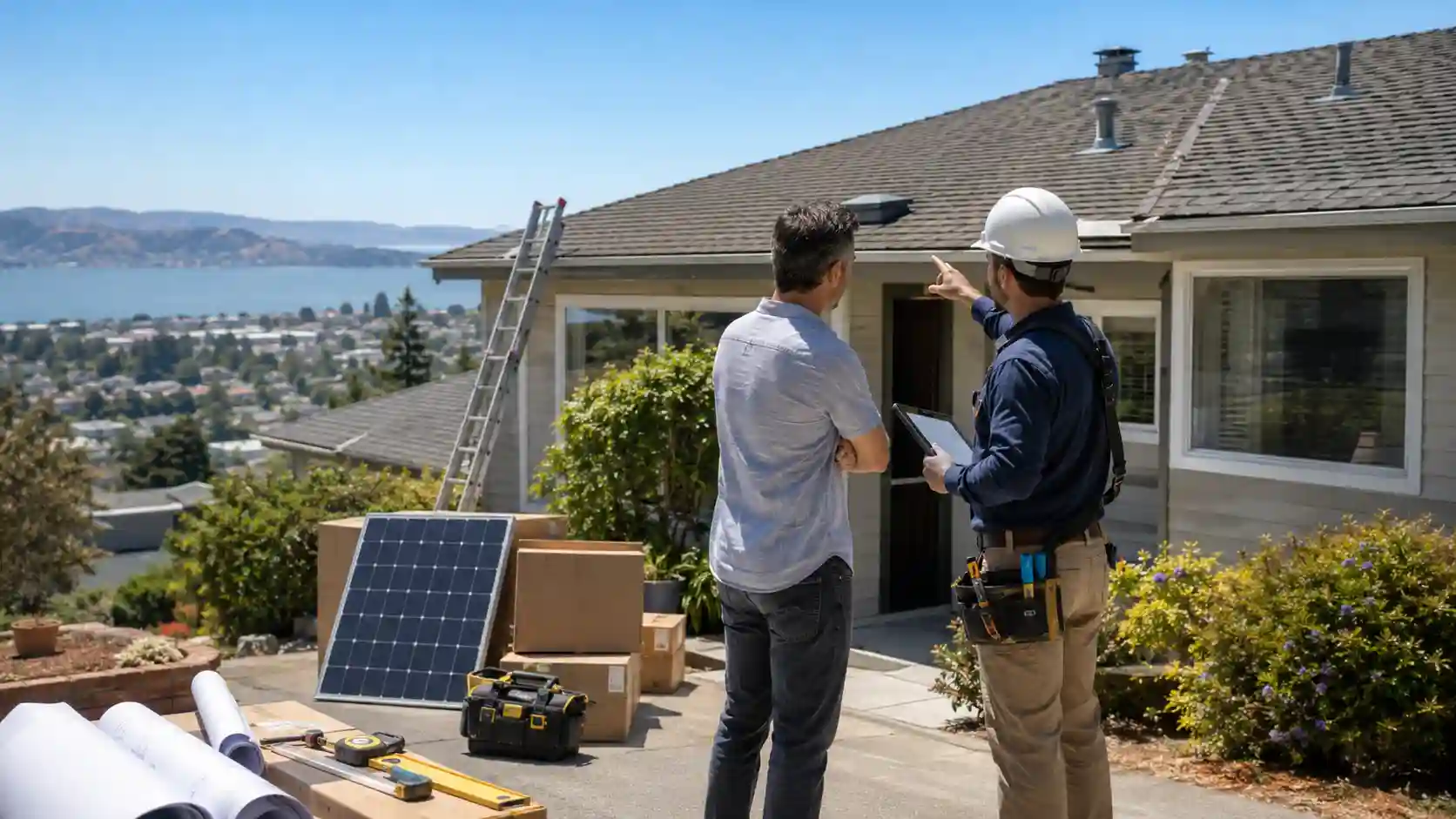
A solar project in the Bay Area often starts with a simple goal: lower electric bills and use cleaner power. Before choosing equipment, homeowners should also read a practical solar panel performance guide to understand why panel efficiency, shade and roof layout matter.
Once that foundation is clear, the real project questions become easier. Which roof areas should be used? Does battery storage make sense? How long will permitting take? What happens after installation if a panel, inverter or monitoring system needs attention?
The best solar installation is not just fast. It is planned well enough that the homeowner understands what will happen before, during and after the work.
Start With the Roof, Not the Sales Pitch
Bay Area homes can have very different roof shapes, materials and sun exposure. Some roofs are simple and open. Others have multiple planes, skylights, vents, chimneys, nearby trees or neighboring structures that create partial shade. A strong solar design should be based on the roof that actually exists, not a generic system size. The proposal should show where panels will be placed and explain why those areas were selected.Roof condition comes first
If the roof is old or close to replacement, it is usually smarter to address that before solar panels are installed. Removing and reinstalling panels later can add avoidable cost and scheduling complexity.Shading should be measured, not guessed
Shade from trees, dormers, vents or nearby buildings can reduce solar production. A good installer should explain how shade was evaluated and whether the system design uses optimizers, microinverters or another strategy to reduce losses.A useful homeowner question
Ask the installer: “Which part of my roof produces the most useful solar energy, and which areas did you avoid?” The answer should be specific.System Size Should Match Real Energy Use
Solar system size should not be chosen by guesswork. It should reflect the household’s electricity usage, roof space, utility rate structure and future plans. In the Bay Area, future electricity use can change quickly. A homeowner may add an electric vehicle, switch to a heat pump, install battery storage, build an ADU, work from home more often or add new appliances. Those changes can affect the ideal solar design.Energy details worth reviewing
- Annual electricity consumption
- Seasonal usage patterns
- Daytime versus evening energy habits
- Electric vehicle charging plans
- Battery storage interest
- Future appliance or HVAC upgrades
- Whether the homeowner wants bill reduction, backup power or both
Panel Quality Matters When Roof Space Is Limited
Not every home has unlimited roof space. In dense Bay Area neighborhoods, usable roof area can be limited by shade, roof complexity, vents, skylights or architectural design. In those cases, panel efficiency can become a practical design factor. Higher-performing panels may help produce more electricity from fewer modules. That can be useful when the best roof sections are limited or when the homeowner wants a cleaner layout.What to compare in solar panels
- Panel manufacturer and model
- Wattage per module
- Module efficiency
- Product warranty
- Performance warranty
- Expected degradation rate
- Appearance, including all-black options
- Compatibility with the inverter system
More panels do not always mean a better system. The better question is how much useful energy the design can produce from the roof’s best available space.
Battery Storage Should Be Discussed Early
Battery storage changes the solar conversation. Without a battery, the system primarily produces electricity during daylight hours. With a battery, some of that energy can be stored for evening use or selected backup loads. For Bay Area homeowners, batteries may be considered for outage preparedness, time-of-use rates, evening consumption or greater energy independence. The right choice depends on the home’s goals and budget.When a battery may be worth considering
- The home uses significant electricity after sunset
- The homeowner wants backup for essential circuits
- The area experiences planned or unplanned outages
- Utility rates make evening grid power more expensive
- The household has or plans to add an electric vehicle
- The homeowner wants to use more of their own solar production
Define “backup power” clearly
Backup power can mean different things. Some homeowners want to keep the refrigerator, lights, internet and a few outlets running. Others expect larger loads. The proposal should clearly explain what the battery can support during an outage.Permitting and Utility Approval Affect the Timeline
A solar installation is not only the day panels are placed on the roof. The full process may include site evaluation, final design, permitting, utility paperwork, equipment scheduling, inspection, approval and monitoring setup. Homeowners should ask for a realistic project timeline and understand which steps depend on local permitting or utility approval. A fast installation is valuable, but the process should still be handled carefully.A typical project sequence may include:
- Initial consultation
- Energy usage review
- Roof and electrical site survey
- Final system design
- Permit submission
- Utility interconnection paperwork
- Equipment delivery and installation
- Inspection
- Permission to operate
- Monitoring setup and homeowner walkthrough
Monitoring Turns Solar Into Something You Can See
Monitoring is one of the most useful parts of a modern solar system. It helps homeowners see daily production, seasonal patterns and possible drops in output.What monitoring should help show
- Daily solar production
- Monthly and annual energy trends
- Battery charging and discharging, if included
- System alerts or errors
- Possible production drops
- How much energy the home uses from solar, battery and grid
Service Support Is Part of the Solar Decision
Solar panels are long-term equipment. Homeowners should not only ask what happens during installation, but also what happens afterward. Who answers service questions? Who handles warranty claims? What if monitoring stops working? What if a panel or inverter issue appears? The strongest solar companies make post-installation support part of the customer experience, not an afterthought.Questions to ask about service
- Who handles warranty claims?
- What labor warranty is included?
- How are monitoring alerts reviewed?
- What happens if an inverter or panel fails?
- Is system maintenance available?
- How quickly does the company respond to service requests?
- Are service terms written clearly in the agreement?
The installer’s work does not stop being important when the panels turn on. Long-term support is part of the value of the system.
Commercial and Specialty Solar Projects Need Extra Planning
Commercial buildings, aquatic centers, schools, warehouses and community facilities may have larger and more complex solar needs than a typical home. These projects usually require closer attention to structural load, energy profile, equipment access, safety, operating hours and maintenance.For commercial solar, ask about:
- Load profile and demand patterns
- Roof structure and available space
- Flat roof drainage and access paths
- Utility rate structure
- Expected annual production
- Maintenance access
- Monitoring and reporting
- Expansion potential
Specialty sites need site-specific design
Aquatic centers and similar facilities may have high daytime energy demand, pumps, heating needs and unique operating schedules. A solar proposal should reflect those realities instead of using a standard commercial template.Bay Area Solar Installation Checklist
Before approving a solar project, homeowners and property owners should make sure the main details are clear.- Roof condition has been reviewed
- System size is based on real electricity use
- Panel layout is explained clearly
- Shade and roof orientation are accounted for
- Panel and inverter models are listed
- Battery storage is included, optional or future-ready
- Permitting and utility steps are explained
- Monitoring tools are included
- Warranty and service support are written clearly
- Future energy needs have been discussed
Final Thoughts
A Bay Area solar project should feel clear before installation begins. The homeowner should understand the roof layout, system size, panel choice, battery options, permitting steps, monitoring tools and service support. When those details are explained well, solar becomes easier to trust. The project is no longer just a set of panels on a roof — it becomes a planned energy upgrade designed for the home, the climate and the way the property actually uses power.STAY IN THE LOOP